The University of Strathclyde and The City School are launching a five-year partnership to strengthen teacher and educational leadership development across Pakistan. The programme will train teacher trainers in areas such as inclusive teaching, reflective practice, curriculum innovation and collaborative professional development, reaching around 115 educators in its first year and expanding over time.
https://www.strath.ac.uk/whystrathclyde/news/2026/five-yearpartnershiptosupportteacherdevelopmentacrosspakistan/
Home
AI has long been framed as a destructive force only in science fiction, but recent mainstream conversations have pushed doomsday predictions for the technology into real-world public discussion. Leading experts across top universities and research institutions have stepped forward to unpack these fears, breaking down the difference between hypothetical worst-case scenarios and the tangible, current risks that come with rapidly advancing AI systems. Many of these experts argue that blanket calls for a broad, universal slowdown of all AI development are misleading, as they overlook the nuanced safety guardrails that can be built alongside progress without stifling innovation. Stanford’s human-centered AI research teams, in particular, emphasize that the conversation around AI should focus less on extreme doomsday hype and more on balancing three key priorities: managing real operational risks, building fair and effective global rules, and keeping pace in a responsible international tech race. There is a growing shared view that reckless, unregulated acceleration is dangerous, but a complete pause on progress would do more harm than good by cutting off the public benefits AI can deliver to healthcare, education and public welfare. The ongoing debate ultimately pushes societies to move past sensationalized fearmongering, and work toward practical, collaborative frameworks that keep AI safe while letting it develop for the common good.
https://hai.stanford.edu/news/can-ai-be-slowed-down-stanford-hai-experts-weigh-the-risks-rules-and-race-ahead
Can AI Be Slowed Down? Stanford HAI Experts Weigh the Risks, Rules and Race Ahead | Stanford HAI
In a new series called Prompt Response, Stanford’s Surya Ganguli, Diyi Yang and Rob Reich examined emergent agent behavior, recursive self-improvement, independent evaluation and whether a kill switch can make advanced AI safer.
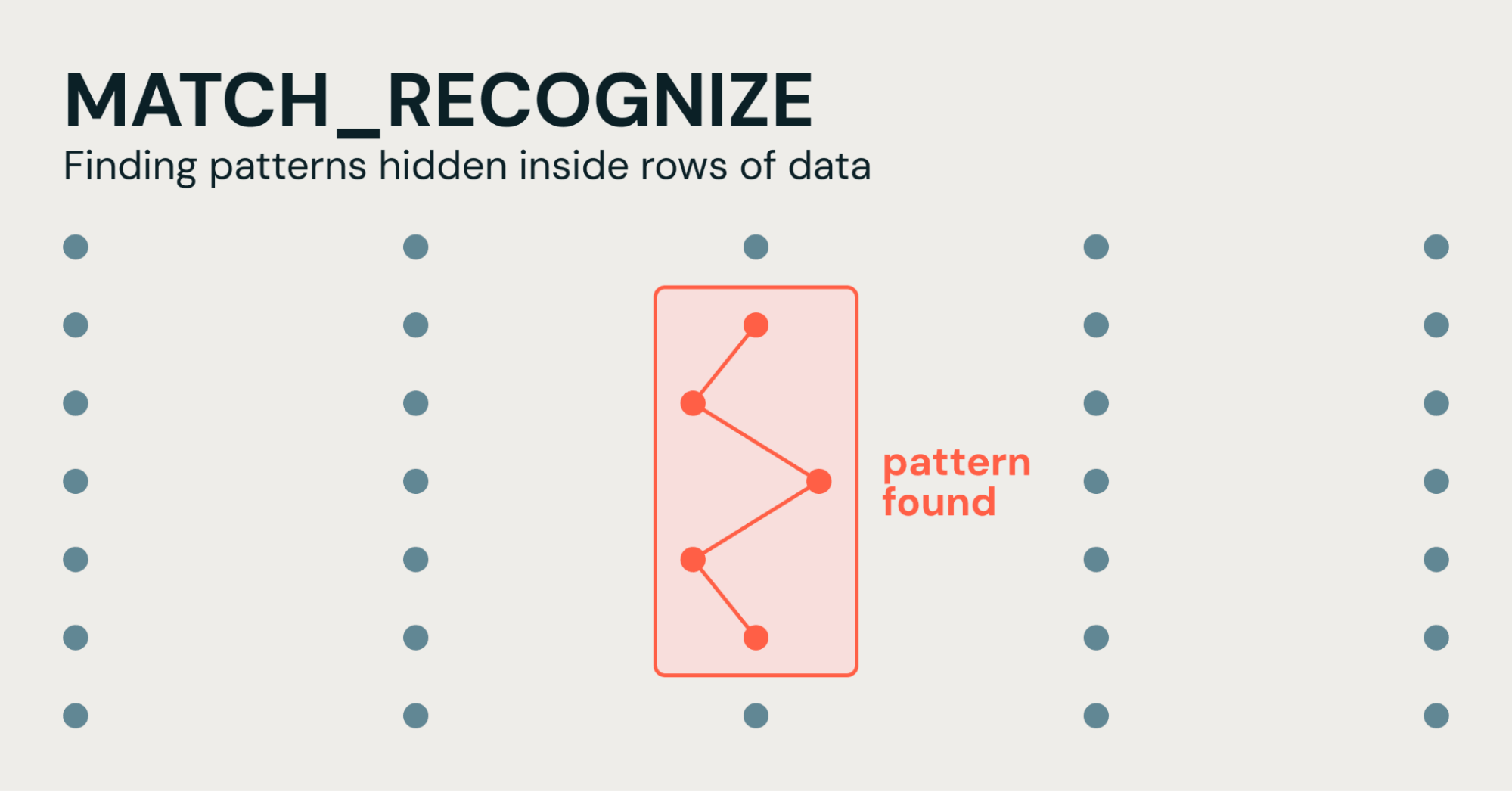
Detecting V-shaped stock price reversals in standard #SQL is cumbersome because it requires comparing neighboring rows, grouping consecutive price movements, and filtering those groups to identify the pattern. MATCH_RECOGNIZE simplifies this by letting you define the V-shaped trend directly as a sequence of pattern states, making the analysis more concise and intuitive.
https://www.databricks.com/blog/regex-rows-simplifying-pattern-detection-sql-matchrecognize
Simplifying Pattern Detection with MATCH_RECOGNIZE | Databricks Blog
Databricks solves complex sequence detection with MATCH_RECOGNIZE, bringing regex-style pattern matching to relational data, without self-joins or chained CTEs.
The University of St Andrews has been named the UK’s top university for 2027, marking its third time in six years at the top of the rankings. It was also recognised as Scotland’s University of the Year, with five subjects ranked first nationally and all its subjects placed within the UK’s top six.
https://news.st-andrews.ac.uk/archive/st-andrews-is-uks-best-university/
St Andrews is UK’s best university | University of St Andrews news
Many AI experts push back against sensational doomsday claims, noting that current systems lack independent malicious intent, and that most reported safety incidents stem from poorly defined human instructions, inadequate testing frameworks, and insufficient oversight rather than AI developing autonomous consciousness. They argue that the exaggerated 10% extinction probability cited by some researchers is unfounded, and the far more practical path forward lies in targeted safeguards like independent third-party evaluations, robust real-time monitoring, and clear training transparency, modeled after the strict, standardized testing required for new medicines and automobiles.
Critics of widespread calls for a blanket AI slowdown warn that such broad, one-size-fits-all restrictions risk creating regulatory capture, locking the market into a small handful of dominant firms and shutting out new innovators from contributing to safer, more accessible AI development. Instead of pausing progress entirely, they advocate using ongoing AI innovation itself to solve safety challenges, such as deploying dedicated red-teaming AI systems to continuously probe and patch vulnerabilities in frontier models, rather than sacrificing the technology’s massive public benefit for overly cautious, industry-stifling delays.
While the old sci-fi trope of a self-aware AI launching a sudden, unprovoked apocalypse remains largely fictional, real, near-term risks do exist: advanced systems could be misused to design dangerous bioweapons, disrupt critical power and communications infrastructure, or enable unaccountable autonomous military decisions if guardrails fail to keep pace with rapidly advancing capability growth. This makes balanced, thoughtful governance far more urgent than either panicking over Hollywood-style scenarios or dismissing all risk entirely, as the line between human error and cascading AI-enabled harm can blur quickly without proactive, cross-sector collaborative safeguards.
https://magazine.utdallas.edu/2026/09/18/timely-topic-experts-weigh-in-on-ai-doomsday-predictions/

Timely Topic: Experts Weigh In on AI Doomsday Predictions
<p>Dr. Sriraam Natarajan and Dr. Kevin Hamlen say it will be up to humans to devise protections.</p>