Luyi Xing, a computer science associate professor at the University of Illinois Urbana-Champaign's Siebel School of Computing and Data Science, has received a $1.5 million NSF Safe-OSE grant alongside his research collaborators to boost security for AI agent ecosystems, building on his existing work with Ecma International. He serves as the secretary of Ecma’s Technical Committee 56, which developed the NLIP open protocol for seamless, cross-boundary communication between humans and disparate AI agents — a protocol that has already earned an approval vote from ISO member countries to soon become an official international standard. This NSF project will add standardized security enforcement layers on top of NLIP to defend against a wide range of critical AI agent threats such as prompt injection, session hijacking and memory poisoning, while also releasing fully open-source security extensions, validation tools and conformance resources to support a safe, interoperable global AI agent ecosystem.

https://siebelschool.illinois.edu/news/luyi-xing-nsf-grant-ecma

Open Graph Image
siebelschool.illinois.edu

Luyi Xing receives NSF grant and sets AI Agent Ecosystems ISO standard

Luyi Xing, CS associate professor at the Siebel School of Computing and Data Science in The Grainger College of Engineering, received a $1.5M National Science Foundation (NSF) Safe-OSE grant to advance security for AI Agent Ecosystem. Xing and his team are building on the Natural Language Interaction Protocol (NLIP) for communication with and between AI agents, for which Xing has held a leadership role with Ecma International and which will soon become an official ISO standard.


ggsql 0.5.0 introduces a hybrid reader for read-only databases and a new rendering engine that supports direct export to PNG, JPEG, TIFF, WebP, SVG, and PDF. The release also adds richer text formatting, captions, minor axis breaks, and variable line styling, while moving the project into beta and setting the stage for tables, plot composition, and interactivity.

https://opensource.posit.co/blog/2026-09-24_ggsql_0_5_0/

Open Graph Image
opensource.posit.co

ggsql 0.5.0: Readers, Writers, and Beta status

We are absolutely thrilled to announce the release of ggsql 0.5.0, the first beta release of ggsql since the initial release back in April. While this release brings a lot of core improvements, the beta label marks the maturity of the project more than any specific feature in this release. That being said, the features included are exciting so let’s tell you all about them.

#Snowflake’s PERIOD data type represents a time range with explicit start and end boundaries, making it easier to query effective dates, detect overlapping ranges, and join historical records based on a specific date. It can also be used to intersect time ranges, such as splitting a work shift across reporting periods, while consistently handling boundaries and reducing complex date comparisons


WITH windows AS (
    SELECT
        PERIOD(TIMESTAMP_NTZ)
          '[2026-09-13 22:00:00, 2026-09-14 06:00:00)' AS duty,
        PERIOD(TIMESTAMP_NTZ)
          '[2026-09-14 00:00:00, 2026-09-21 00:00:00)' AS workweek
), allocation AS (
    SELECT PERIOD_INTERSECT(duty, workweek) AS segment
    FROM windows
)
SELECT DATEDIFF('second', PERIOD_BEGIN(segment), PERIOD_END(segment))
           / 3600.0 AS hours_in_workweek
FROM allocation;
https://medium.com/snowflake/query-time-ranges-with-snowflakes-period-data-type-ce229d2306bd

medium.com

medium.com

AI is advancing rapidly, creating both significant opportunities and real risks, but experts disagree about whether extreme “doomsday” scenarios are realistic or how urgently development should be slowed. The main concern is less about AI suddenly becoming conscious and more about poorly designed systems, misuse, unpredictable behavior, and inadequate safeguards, making stronger testing, monitoring, transparency, regulation, and human oversight important as development continues.

https://hls.harvard.edu/today/are-you-an-ai-idealist-alarmist-or-skeptic/

Open Graph Image
hls.harvard.edu

Are you an AI idealist, alarmist, or skeptic? - Harvard Law School

A Harvard Law course will explore the values, incentives, and anxieties driving artificial intelligence.

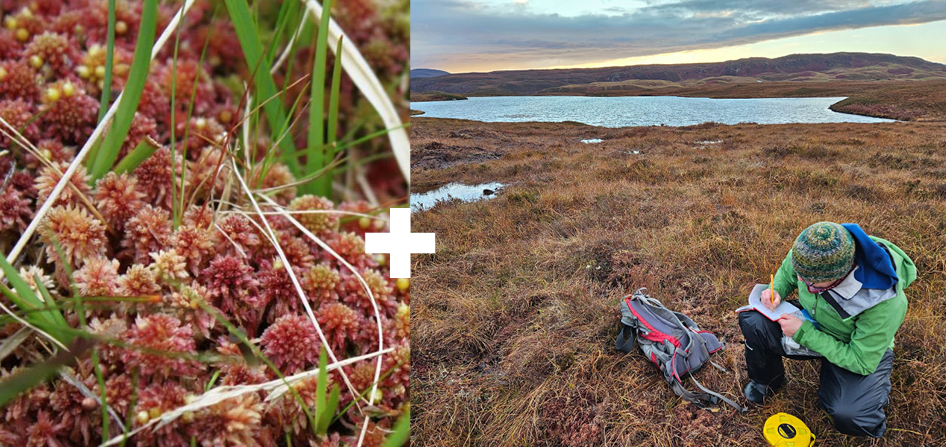
This two-year, £2.7 million collaborative research project brings together multiple UK academic institutions to develop drought-resistant Sphagnum moss varieties, a critical step in protecting peatlands from worsening dry weather. The team will identify naturally drought-tolerant local moss populations across the UK and Ireland, sequence their genomes to pinpoint key adaptive traits, and establish the first controlled breeding methods for this species. These new resilient moss strains will help preserve peatlands’ vital functions of locking away carbon, supporting biodiversity, and retaining water as climate conditions become more extreme.
https://www.uhi.ac.uk/en/media/2026-news/uhi-researchers-join-27-million-project-to-develop-drought-resistant-peatland-moss.html

Open Graph Image
www.uhi.ac.uk

UHI researchers join £2.7 million project to develop drought-resistant peatland moss

Researchers from the University of the Highlands and Islands (UHI) are taking part in a new £2.7 million project exploring how Sphagnum moss could be made more resilient to drought and changing weather patterns.