
Artificial intelligence is rapidly changing how people live and work, creating both major opportunities and new ethical concerns. Important issues include privacy, healthcare, employment, and the ability of AI systems to make predictions that could affect people’s lives. Traditional government regulation may struggle to keep up because AI develops much faster than political and legal processes. Two main approaches are discussed: slowing AI development until it is safer, or continuing innovation while using new technologies to identify and reduce risks. One example is using a separate AI system to test another system for weaknesses and potential security problems. The broader challenge is finding ways to encourage AI’s benefits while addressing its risks without creating regulations that unintentionally limit competition and innovation.

https://www.pace.edu/news/dont-be-misled-calls-ai-slowdown

Open Graph Image
www.pace.edu

Don’t Be Misled by Calls for an AI Slowdown

James Brusseau, PhD, explores AI ethics, regulation, and the case for accelerating innovation rather than slowing artificial intelligence development.

Researchers at the University of Maryland and partner universities developed DissolvPCB, a circuit board made with water-soluble plastic and liquid metal that can be dissolved after use, allowing its materials and electronic components to be recovered and reused. The project recovered more than 98% of its materials in testing and earned an honorable mention in Fast Company’s 2026 Innovation by Design Awards for its potential to reduce electronic waste and prototyping costs

https://www.cs.umd.edu/article/2026/09/dissolvable-circuit-board-designed-reuse-earns-design-recognition

www.cs.umd.edu

Dissolvable Circuit Board Designed for Reuse Earns Design Recognition

Before an electronic device reaches its final form, engineers may build and test multiple versions of its circuit board.

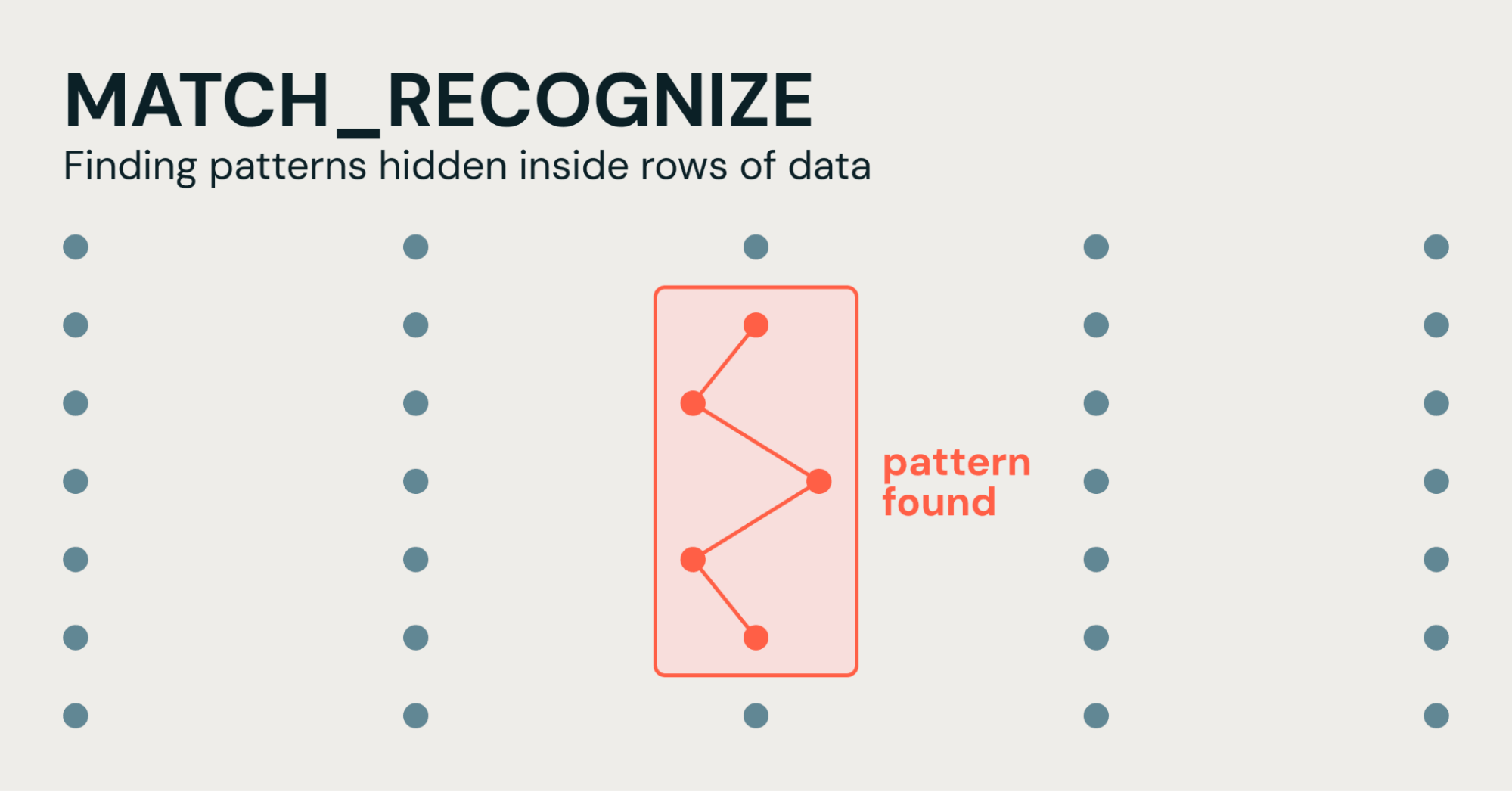
The goal is to identify ecommerce users who show strong purchase intent but ultimately do not complete a purchase. A high-value failed conversion pattern includes users who view a product at least twice, add it to their cart, and then become inactive for a defined period. This group can help product managers target reminder campaigns, estimate how much revenue might be recovered, and identify potential issues such as products being priced too high. Because there is no explicit “abandoned” event, abandonment must be inferred from the absence of activity after the cart addition and a sufficient idle period. Traditional #SQL requires techniques such as NOT EXISTS, self-joins, and window functions to establish that no later activity occurred. MATCH_RECOGNIZE simplifies this by using the end-of-partition anchor $ to ensure the cart addition is the final event, combined with a time filter to define the abandonment timeout.


SELECT *
FROM (
    SELECT *
    FROM web_clickstream
    MATCH_RECOGNIZE (
        PARTITION BY session_id
        ORDER BY event_time
        MEASURES
            FIRST(VIEW.event_time) AS journey_start,
            COUNT(VIEW.*)          AS total_product_views,
            ADD_TO_CART.event_time AS last_activity_time
        ONE ROW PER MATCH
        AFTER MATCH SKIP PAST LAST ROW
        PATTERN (VIEW{2,} ADD_TO_CART $)
        DEFINE
            VIEW        AS event_type = 'VIEW_PRODUCT',
            ADD_TO_CART AS event_type = 'ADD_TO_CART' AND cart_item_count > 0
    )
)
WHERE last_activity_time < current_timestamp() - INTERVAL 30 MINUTES;
https://www.databricks.com/blog/regex-rows-simplifying-pattern-detection-sql-matchrecognize

Open Graph Image
www.databricks.com

Simplifying Pattern Detection with MATCH_RECOGNIZE | Databricks Blog

Databricks solves complex sequence detection with MATCH_RECOGNIZE, bringing regex-style pattern matching to relational data, without self-joins or chained CTEs.