Microsoft Fabric Graph now supports unbounded variable-length paths, allowing queries to follow relationships as deeply as needed instead of being limited to eight hops. This makes it easier to analyze complex chains such as conversations, data lineage, dependencies, organizational hierarchies, and supply chains, while bounded paths remain preferable when depth, performance, or cost needs to be controlled.

https://www.linkedin.com/pulse/explore-deeper-connections-unbounded-variable-length-paths-fine-9oohc/

Open Graph Image
www.linkedin.com

Explore deeper connections with unbounded variable-length paths in Microsoft Fabric Graph

Microsoft Fabric Graph removes the previous hop limit for variable-length traversals, allowing graph structure to determine path depth. Graph analysis is often about discovering how entities connect when the number of relationships between them isn’t known in advance.

Imperial College London recently convened researchers and industry experts to explore how nature-inspired computing could help meet the surging demand for AI while addressing the unsustainable energy and infrastructure costs of current systems. Drawing on biological models like the human brain and plant networks, new hardware paradigms such as neuromorphic chips aim to deliver major gains in efficiency and performance, but real-world adoption hinges on overcoming barriers in skills, manufacturing scale-up, investment, and regulation. Success will depend on converging disciplines and sectors—universities, startups, and large tech firms working together—to co-design, demonstrate, and deploy these next-generation technologies.
https://www.imperial.ac.uk/news/articles/convergence-science/2026/nature-inspired-computation-real-world-challenges-and-opportunities-/

Open Graph Image
www.imperial.ac.uk

Nature-inspired computation: real world challenges and opportunities

Nature has been solving complex problems with remarkable efficiency for millions of years. Could modern computing learn from it?

Two new studies highlight significant gaps between the promises of technology and the real-world experiences of users, particularly regarding social media safety communications and AI-driven health advice. Research on major platforms reveals that safety features are often described vaguely or selectively, shifting responsibility onto families rather than addressing underlying design and business practices. Meanwhile, an analysis of Alzheimer’s caregiving support shows that while AI chatbots sound polite and informative, they lack the contextual depth, emotional nuance, and lived experience that human caregivers and clinicians provide.

https://icsi.berkeley.edu/gaps-in-social-media-risk-communication-and-ai-health-advice/

Open Graph Image
icsi.berkeley.edu

New Research Reveals Gaps in Social Media Risk Communication and AI Health Advice - International Computer Science Institute (ICSI)

In two studies, scientists examined platforms’ approaches to youth safety and how chatbots stack up to humans in conversations about dementia.

Microsoft Fabric Graph has added support for additional #GQL features with richer path semantics, traversal controls, and composable query constructs for analyzing complex graph structures. Variable-length and unbounded paths can be combined with modes such as WALK, TRAIL, SIMPLE, ACYCLIC, and DIFFERENT EDGES to control whether vertices or edges may be revisited during traversal. ANY SHORTEST provides shortest-path matching, while functions such as NODES, EDGES, INNER_NODES, SOURCE, DESTINATION, and ELEMENT_ID expose individual components and identifiers of matched paths. Query composition is enhanced through NEXT, EXISTS, CALL, OPTIONAL CALL, and UNION DISTINCT, enabling multi-stage pattern matching, conditional execution, subqueries, and deduplicated result sets. Aggregation is more expressive through filtered and nested aggregate expressions, alongside COLLECT_ONE, COLLECT_LIST, and COLLECT_ELEMENTS for constructing scalar and collection-based results from graph matches. The language also supports dynamic nested values and explicit type conversion with CAST, together with functions such as RANGE and POWER for generating sequences and performing numerical operations within queries.

https://learn.microsoft.com/en-us/fabric/graph/gql-language-guide

Open Graph Image
learn.microsoft.com

GQL Language Guide for graph in Microsoft Fabric - Microsoft Fabric

Learn how to write GQL queries for graph in Microsoft Fabric, including pattern matching, filtering, aggregation, sorting, and subqueries with examples.

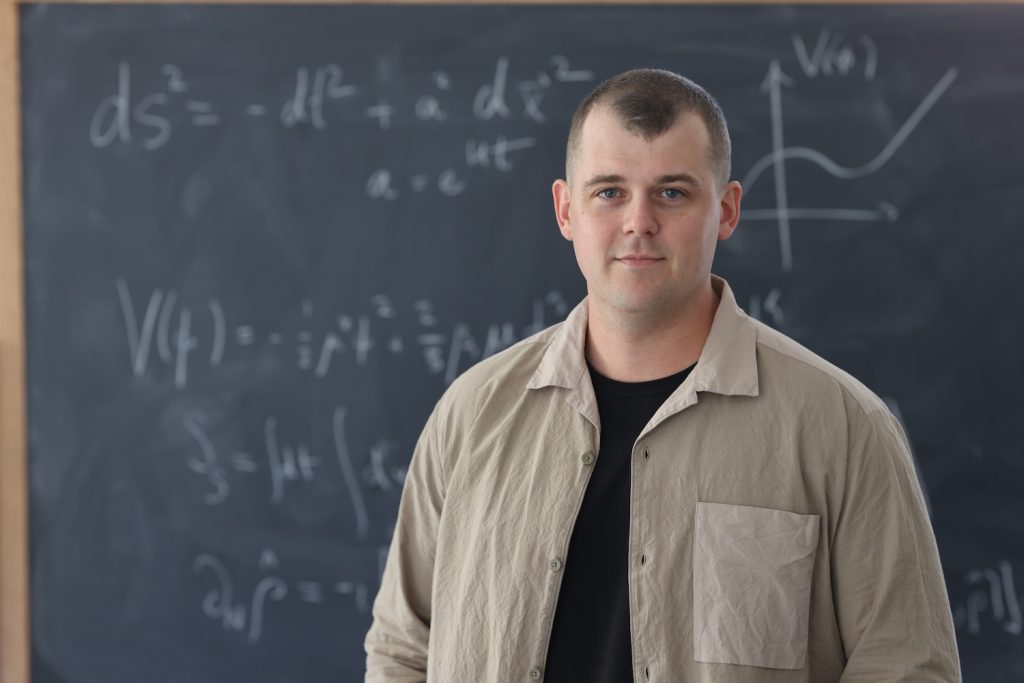
New research suggests the universe may be effectively “locked” in its current state because interactions with its surroundings suppress quantum tunneling, potentially preventing fields such as the Higgs field from shifting to a lower-energy state. The finding, inspired by techniques used in quantum computing, offers a possible explanation for why the universe remains stable, though it does not prove that it will remain so indefinitely. Read more

https://news.syr.edu/2026/10/05/researcher-helps-show-why-the-universe-may-be-stuck-in-place/

Open Graph Image
news.syr.edu

Researcher Helps Show Why the Universe May Be Stuck in Place

The universe may be trapped in its own comfort zone, and a researcher in the College of Engineering and Computer Science has helped explain why it cannot seem to leave. A new study suggests the universe could be locked into its current state by the same kinds of quantum effects that scientists study when trying to preserve fragile information inside a quantum computer. The paper, titled “Cos...